|
Australian
filmmaker John Pilger curates documentary film festival for MCA and Riverside
Theatres - 22nd November 2018


Profiles Social
and Community Art
Television Australia
Wrestling
Bitcoin
Business
Entertainment
Sports Streaming
Pop Culture Advertising
Promotions Contact
Us 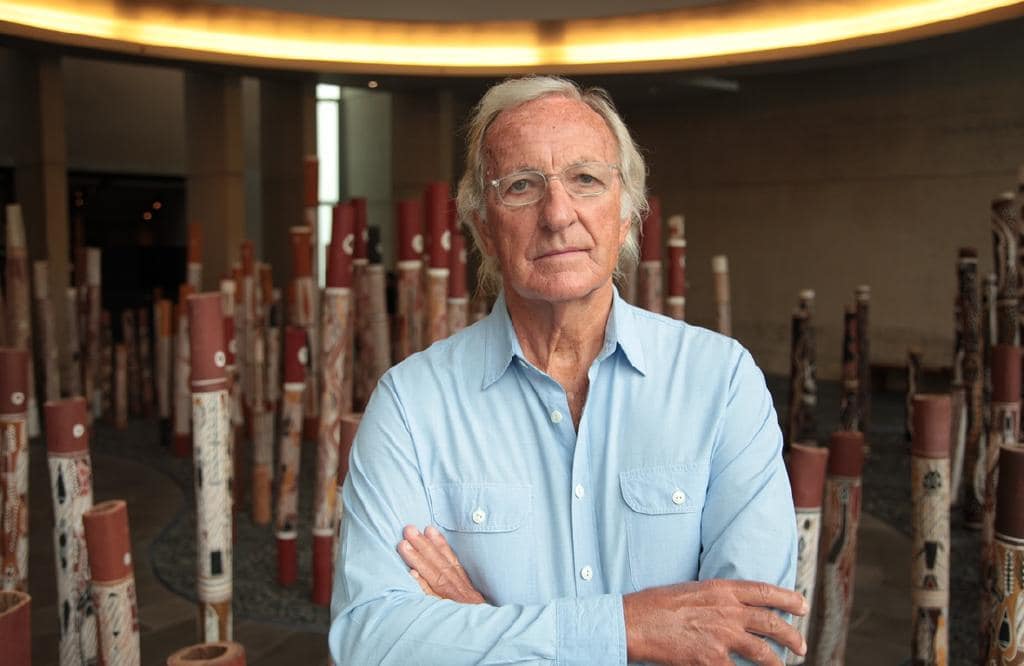
Australian
journalist and filmmaker John Pilger. Picture: supplied by
Elizabeth Fortescue, Arts Editor RENOWNED
Australian documentary filmmaker John Pilger is in Sydney to help prevent a kind
of extinction — the death of “documentaries that go against the received
wisdom”. “Documentaries
tell unpalatable truths,” Pilger says. “At
their best, they will rip down a facade and tell a truth.” Lamenting
that Sydney has no equivalent of the British Film Institute, and that the Valhalla
in Glebe stopped showing documentaries years ago, Pilger has created his
own
documentary festival. It’s
called The Power Of The Documentary: Breaking The Silence. Pilger
selected 27 documentaries to be seen at two venues — the Museum of Contemporary
Art Australia and Riverside Theatres Parramatta. He
will introduce many of them himself. They’re all the kind of documentaries
that matter to Pilger because they challenged the status quo and revealed unpleasant
truths hidden behind official censorship or the compliance of a tame media. Peter
Watkins’ 1965 work, The War Game, is one of them. It was made for the BBC
and imagined a UK town that had been hit by a nuclear weapon. Its
realism was heightened by the use of amateur actors and “live interviews”. “It
was based on classified documents (of how a nuclear attack would play out),”
Pilger says. “It
frightened the BBC because it was so authentic. It could change people’s
minds about nuclear weapons. They banned (the film) for 23 years.” Another
of the documentaries Pilger most admires — and of course it’s in the
festival — is Harvest of Shame, made in 1960 by CBS war correspondent Edward
R. Murrow. Exposing
the shocking reality of American migrant agricultural workers, the documentary
“understood that slavery hadn’t ended in the US — slave conditions”,
Pilger says. “This
film had a huge effect. Five years later the Civil Rights Bill ended slavery.” The
festival will include some of Pilger’s own films including The Quiet Mutiny,
exposing the “violent anarchy” among American soldiers during the Vietnam
War. “Young
soldiers were shooting their own officers,” Pilger says. “The film got
me into all sorts of trouble.” The
Power Of The Documentary: Breaking The Silence is an event that runs alongside
the MCA’s summer exhibition of photographs by acclaimed South African David
Goldblatt, who documented many facets of the cruel apartheid regime. David Goldblatt:
Photographs 1948–2018 is on view at the MCA until March 3, 2019. “I
have admired Goldblatt’s work for a very long time,” Pilger says. “I
have a long association with South Africa. I was banned for about 25 years.” Pilger
is based in London. Last year the British Library acquired the complete digital
archive of his journalism career including 60 of his films. The
Power Of The Documentary: Breaking The Silence, Museum of Contemporary Art Australia,
The Rocks, and Riverside Theatres, Parramatta; until December 9, single sessions
adult $15, concession $12, festival pass $99, thepowerofthedocumentary.com.au (The
Daily Telegraph) 

|