|
Facebook
promises crackdown on fake news in Australia - 5th April 2019



Profiles Australia
Wrestling
Bitcoin
Business
Entertainment
Sports Streaming
Pop Culture Advertising
Promotions Contact
Us 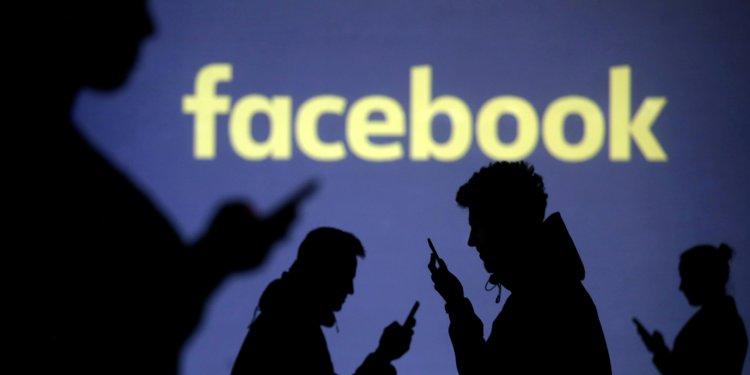
FILE
PHOTO: Silhouettes of mobile users are seen next to a screen projection of the
Facebook logo in this picture illustration taken March 28, 2018. REUTERS/Dado
Ruvic/Illustration/File Photo by
Tom Westbrook SYDNEY
(Reuters) - Social media giant Facebook Inc said on Friday it would strengthen
measures to fight fake news in Australia and briefly block foreigners from buying
political advertisements in the lead-up to a national election due in a few weeks. The
move comes with the company - and its peers around the world - under growing pressure
to rid their platforms of misinformation after Russia allegedly used Facebook
to influence the 2016 U.S. presidential election. In
Australia, it is not clear which, if any, foreigners had sought to buy campaign
ads, but the government warned in 2017 of Chinese interference attempts and said
in February a foreign government had hacked parliament’s computer network. Facebook’s
move also comes as its market power and social influence faces greater scrutiny,
particularly in the wake of the mass shooting at a mosque in New Zealand which
was broadcast live on one of the U.S. firm’s platforms. Facebook
said its new controls on Australian political advertising would take effect as
soon as the vote was called, which is expected to happen in the next few days. Foreigners
would be forbidden from buying advertising mentioning political parties, slogans
and logos, Mia Garlick, Facebook’s director of policy for Australia and New
Zealand, said in a statement. To
fight so-called fake news and misinformation, the U.S. firm would launch a fact-checking
service in Australia in partnership with French news agency Agence France-Presse,
she added. It would also remove fake accounts and make sensational stories less
prominent in users’ newsfeeds. Australia’s
major political parties, which between them are expected to spend millions of
dollars buying Facebook ads during the campaign, had no comment on the company’s
announcement on Friday.
GLOBAL
PROBLEM
Policing
social media content has become a massive global problem, with no template for
consistently preventing fake news online or eliminating it. Andrea
Carson, a political scientist specializing in media and communications at La Trobe
University in Melbourne, said Facebook faced tighter regulation in the future. “There’s
a climate for change,” she said. Fierce
internet disinformation battles have gripped countries such as Brazil and Malaysia
ahead of elections. Authorities
in Indonesia and the European Union, which are due to hold polls, have also warned
of the threat of fake news, while in India, Facebook has ramped up efforts to
block fake accounts. The
market dominance of Facebook and of Alphabet Inc’s Google has also drawn
the attention of Australia’s competition regulator, which is pushing for
greater scrutiny of their power and influence, something the firms are resisting. (Reuters) 
|