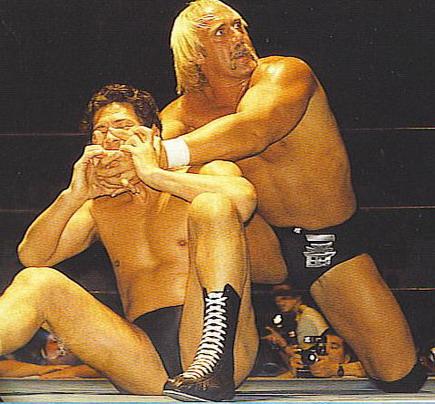
Inoki
became one of the biggest names on Japan's pro-wrestling's
circuit in the 1960s
His
fame went global in 1976 when he had a mixed martial
arts match with boxing legend Muhammad Ali
On
his YouTube channel, called "Antonio Inoki's
Last Fighting Spirit," he was shown going in
and out of the hospital as he went for treatment of
systemic amyloidosis
Antonio
Inoki, a Japanese professional wrestling star turned
politician widely known for his match with Muhammad
Ali, has died at 79 after years of battling a rare
disease.
"New
Japan Pro-Wrestling is deeply saddened at the passing
of our founder, Antonio Inoki," the company he
started in 1972 posted on Twitter.
"His
achievements, both in professional wrestling and the
global community are without parallel and will never
be forgotten."
Mr
Inoki became one of the biggest names on Japan's pro-wrestling's
circuit in the 1960s.
His
fame went global in 1976 when he had a mixed martial
arts match with boxing legend Muhammad Ali, billed
as "the bout of the century".
The
lantern-jawed, 1.9m performer entered politics, winning
a seat in the upper house of Japan's parliament in
1989.
He
made headlines the next year going to Iraq during
the Gulf War and intervening on behalf of Japanese
hostages, who were subsequently released.
Tributes
to Mr Inoki poured in across social media.
Atsushi
Onita, another pro wrestler turned politician, tweeted
that an era had come to an end.
"Thank
you, Inoki-san. The supreme father of pro wrestling,"
he wrote.
Triple
H, the current chief content officer of World Wrestling
Entertainment Inc and a former grappler, called Mr
Inoki "one of the most important figures in the
history of our business, and a man who embodied the
term 'fighting spirit'".
Mr
Inoki developed close ties with North Korea because
his mentor, early pro-wrestling superstar Rikidozan,
hailed from North Korea but could never go home after
the peninsula was divided by war.
He
made numerous visits to Pyongyang as a politician
and met high-ranking officials, saying Tokyo could
play a role in mediating with its nuclear-armed neighbour.
In
1995, he organised a two-day "Collision in Korea"
wrestling extravaganza before more than 100,000 spectators
in Pyongyang's May Day Stadium.
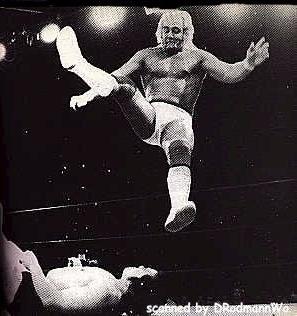
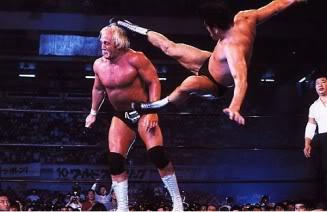
Mr
Inoki defeated Ric Flair in the main event with his
signature "enzuigiri," a jumping kick to
the back of the head.
The
fight with Ali has been described as the birth of
mixed-martial arts, now a multi-billion dollar industry
dominated by US-based Ultimate Fighting Championship.
Ali
was supposed to be paid $6 million to lose in a fixed
fight to Mr Inoki, but the boxer had second thoughts
upon arriving for the event in Tokyo, according to
wrestling journalist Dave Meltzer.
In
the end, the fight was real, but under stipulations
that Mr Inoki could kick only while he had one knee
on the mat.
"Inoki
came out from round one on his back, crawling around
the ring like a crab striking Ali's legs," sports
writer Robert Whiting said in a 2016 podcast.
"The
entire fight, Ali threw a total of six punches. It
was the worst thing I've ever seen."
The
match went to a 15-round draw, and Ali ended up being
paid only $1.8 million, Meltzer wrote.
In
recent years his YouTube channel "Antonio Inoki's
Last Fighting Spirit", had shown Mr Inoki going
in and out of hospital, and raising a clenched fist,
as he received treatment of systemic amyloidosis,
a rare ailment involving a buildup of a protein called
amyloid in the organs.