|
Musk
seeks to reassure advertisers on Twitter after chaos
- November 2022
Profiles
Social
Social
Media Digital
Media
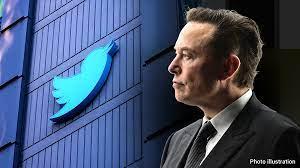
Elon
Musk sought to reassure big companies that advertise
on Twitter on Wednesday that his chaotic takeover
of the social media platform won’t harm their
brands, acknowledging that some “dumb things”
might happen on his way to creating what he says will
be a better, safer user experience.
The
latest erratic move on the minds of major advertisers
— that the company depends on for revenue —
was Musk’s decision to abolish a new “official”
label on high-profile Twitter accounts just hours
after introducing it.
Twitter
began adding gray labels to prominent accounts Wednesday,
including brands like Coca-Cola, Nike and Apple, to
indicate that they are authentic. A few hours later,
the labels started disappearing.
“Apart
from being an aesthetic nightmare when looking at
the Twitter feed, it was simply another way of creating
a two-class system,” the billionaire Tesla CEO
told advertisers in an hour-long conversation broadcast
live on Twitter. “It wasn’t addressing the
core problem.”
Musk’s
comments were his most expansive about Twitter’s
future since he closed a $44 billion deal to buy the
company late last month, dismissed its top executives
almost immediately and, on Friday, fired roughly half
of its workforce. Major brands including General Motors,
United Airlines, General Mills and others have temporarily
halted buying ads on the platform as they watch whether
Musk’s plans to loosen its guardrails against
hate speech will lead to a rise in online toxicity.
Scores
of companies big and small made their presence known
among the more than 100,000 Twitter Space listeners
by signing in with their brand Twitter accounts. The
brand accounts for companies including banks Deutsche
Bank, TD Ameritrade, gas company Chevron, automaker
Nissan, airline Air Canada and many others appeared.
Car brand Audi, which has paused Twitter ads, was
there, as was retailer R.E.I., which said after the
call its ads were still paused.
Musk
said he’s still planning a “content moderation
council” representing diverse viewpoints that
will tackle inappropriate content and reassure advertisers,
but it would take “a few months” to put
together. He said it will be advisory and “not
a command council.”
Lou
Paskalis, longtime marketing and media executive and
former Bank of America head of global media, said
the briefing raised questions that will likely leave
Fortune 500 advertisers uneasy.
The
biggest concern for big advertisers is brand safety
and risk avoidance, he said. And Musk seems uninterested
in reining in his Twitter persona that can be divisive
— such as his tweet ahead of the election advising
Americans to vote Republican.
“To
come out like Elon did ... and say ‘vote Republican
since there’s a Democrat in the White House’
— I don’t know what marketer wants to go
near that,” he said.
One
solution could be to hire a CEO to run the company
and create stability while Musk continues to be his
“Chief Twit” persona, Paskalis said.
Musk
had earlier threatened by tweet a “thermonuclear
name & shame” on advertisers that quit Twitter.
But he took a more measured approach Wednesday, asking
them to “give it a minute and kind of see how
things are evolving.”
“The
best way to understand what’s going on with Twitter
is use Twitter,” he told the group, which was
represented mostly by the head of the Interactive
Advertising Bureau, a trade association.
However,
the confusion on Twitter continued Wednesday. The
rollout hours earlier of the “official”
labels appeared arbitrary, with some politicians,
news outlets and well-known personalities getting
the label and others not. In some cases, whether users
could see an account’s “official” label
appeared to depend on what country they were in.
Then
the labels started disappearing.
YouTube
personality and author John Green got the label but
his younger brother and “vlogging” partner
Hank Green didn’t make the cut. Then John Green’s
label was gone. Another popular YouTuber, Marques
Brownlee, who posts videos on technology, tweeted
he got the label, then tweeted again that it disappeared.
“I
just killed it,” Musk responded, though at first
it wasn’t clear if he was referring specifically
to Brownlee’s label or the entire project.
The
site’s current system of using “blue checks”
to confirm an account’s authenticity will soon
go away for those who don’t pay a monthly fee.
The checkmarks will be available for anyone willing
to pay a $7.99-a-month subscription, which will also
include some bonus features, such as fewer ads and
the ability to have tweets given greater visibility
than those coming from non-subscribers.
The
platform’s current verification system has been
in place since 2009 and was created to ensure high-profile
and public-facing accounts are who they say they are.
Experts
have expressed concern that making the checkmark available
to anyone for a fee could lead to impersonations and
the spreading of misinformation and scams.
The
gray label — a color that tends to blend into
the background whether you use light or dark mode
to scroll Twitter — was an apparent compromise.
Esther
Crawford, a Twitter employee who has been working
on the verification overhaul, had said Tuesday on
Twitter that the “official” label would
be added to “select accounts” when the new
system launches.
“Not
all previously verified accounts will get the ‘Official’
label and the label is not available for purchase,”
said Crawford.
But
after the labels started disappearing Wednesday, she
again took to Twitter to say “there are no sacred
cows in product at Twitter anymore.”
“Elon
is willing to try lots of things — many will
fail, some will succeed,” she said.
There
are about 423,000 verified accounts under the outgoing
system. Many of those belong to celebrities, businesses
and politicians.
But
a large chunk of verified accounts belong to individual
journalists, some with tiny followings at local newspapers
and news sites around the world. The idea was to verify
reporters so their identities couldn’t be used
to push false information on Twitter.
Musk,
who often bristles at critical news coverage, pushed
back against that use of the tool Wednesday, saying
he wanted to elevate “citizen journalism”
and the “voice of the people” over publications
he suggested had too much influence in defining the
“Western narrative.” Journalism professionals
generally consider Musk’s concept of elevating
“citizen journalists” dangerous because
it ignores the need for standards, including fact-checking,
that responsible news organizations enforce.
(AP)
|