|
Sports
Betting: News
Profiles
Advertising
Promotions
Sports
Betting
Kalshi,
Polymarket race to crack ‘multis’ as sports
bet stakes rise
(In
Case You Missed It)
January
16, 2026
By
Stephanie Stacey and Sam Learner
London/New
York | Kalshi and Polymarket are racing to build enough
liquidity to offer lucrative multi-leg sports bets,
as the fast-growing prediction market providers intensify
their efforts to upend the $US14 billion ($20.1 billion)
US sports gambling industry.
The
bets, known as “multis” in Australia, “parlays”
in the US and “accumulators” in the UK,
deliver bettors a big payout if a series of wagers
come good. But while they form a cornerstone of the
mainstream sports gambling market, parlays are difficult
for prediction markets to facilitate.
Prediction
markets allow gamblers to bet on binary outcomes of
future events, such as the result of a football match,
with the prices and implied odds determined by how
participants bet.
To
offer parlays, prediction markets have to establish
liquidity pools for each individual bet, whereas traditional
gambling groups, such as DraftKings and FanDuel owner
Flutter, can simply bundle preset odds.
“The
current downfall [of prediction markets] is their
inability to offer the same range of exotic bets that
US gamblers love so much, like same-game parlays ...
but the market is beginning to find a way to serve
certain sports,” said Adam Rivers, a managing
director at consultancy Alvarez & Marsal.
In
a research note, Bank of America Merrill Lynch analyst
Shaun Kelley hailed parlays as the “killer app”
of sports betting, saying they had “structurally
changed” the industry’s win rates and economics.
While
parlays are unlikely to be as lucrative for prediction
market providers, which charge per transaction, as
they are for conventional sportsbooks, they are still
an opportunity to lure gamblers from conventional
gambling companies.
Incentives
for liquidity
Polymarket
and Kalshi are offering incentives to traders who
help build liquidity on their exchanges – which
has become a strategic goal.
Kalshi,
which offers individual liquidity providers payments
of up to $US1000 per day, last year signed a partnership
with Susquehanna International Group as its “first
institutional market maker”.
Controversially,
the company also operates an in-house unit, Kalshi
Trading, which makes bets on the exchange. The practice
has prompted a proposed class-action lawsuit from
critics, alleging it creates conflicts of interest
and puts customers at a disadvantage. Kalshi co-founder
Luana Lopes Lara has dismissed the lawsuit as “baseless”.
The
popularity of prediction markets has exploded since
they rose to prominence in the run-up to last year’s
US presidential election.
Americans
can use prediction markets to bet against each other
on everything from the frequency of Elon Musk’s
X posts to the likelihood of the US government announcing
this year that aliens exist (current implied odds:
13 per cent).
Kalshi,
which counts Donald Trump jnr as a strategic adviser,
achieved a $US11 billion valuation in a $US1 billion
funding round last month.
Polymarket,
where he is an investor, has recently been in talks
to raise money at a valuation of between $US12 billion
and $US15 billion.
In
November, Bank of America analysts estimated that
prediction markets accounted for between 3 per cent
and 8 per cent of the US online sports betting market.
Sports
betting groups DraftKings and Flutter have also launched
their own prediction markets, although both companies
plan to offer such trading only in US states where
conventional online sports betting is prohibited.
In
New Jersey, one of the few states that breaks down
gambling revenues by type of bet, parlays accounted
for 63 per cent of all revenues from online sports
betting in the year to October.
Kalshi
rolled out its first customisable parlay-style feature
– called “combos” – to all users
in December. In a post on LinkedIn, chief executive
Tarek Mansour said these bets delivered more than
$US100 million in volume in a single week.
Polymarket,
meanwhile, offers preset bundles of bets, largely
outside of sport, but does not yet facilitate customisable
parlays. On the social network Discord, the company
has offered a $US50 bonus for the first user to submit
any multi-leg bet that is launched on Polymarket.
Gambling
bosses have been dismissive of these efforts. Flutter
chief executive Peter Jackson said in an interview
in November that punters would always prefer traditional
sportsbooks because “you don’t have anywhere
near the same breadth of choice [on a prediction market
exchange]”.
DraftKings
chief Jason Robins told investors in November that
prediction markets were “structurally limited”,
highlighting parlays in particular: “Just having
to have individual liquidity pools makes it hard because
then you spread out your liquidity.” (AFR)
Full
article and coverage via subscription to The Austrailan
Financial Review
@FinancialReview
https://afr.com/companies/games-and-wagering/kalshi-polymarket-race-to-crack-multis-as-sports-bet-stakes-rise-20260116-p5nuhm
https://afr.com/topic/sports-betting-1mr2
Media
Man Int
The
Australian Financial Review wins Media Man 'Newspaper
Of The Month' award
Mdia
Man
News
90
Percent of LA Residents Believe BetMGM Spokesperson
Jamie Foxx is a Clone
- December 12, 2023
We
were in Louisiana over the weekend and quickly learned
that the regulated sportsbooks in that state love
using Facebook as a platform to advertise. Ads for
BetMGM, Bet365 and the newly launched ESPN Bet regularly
popped up on our feed.
It
doesn't always work out the way they want however.
A quick glimpse over the comments highlights this
point.
Case
in point, Foxx, 55, fell ill back in the spring and
had to be rushed to the hospital with what was described
then as a "medical complication". It is
known the Hollywood actor remained hospitalized for
a number of weeks and information about his condition
was scarce.
'We
wanted to share that my father, Jamie Foxx, experienced
a medical complication yesterday," shared Corinne
in a statement written on behalf of the Foxx family
at the time.
"Luckily,
due to quick action and great care, he is already
on his way to recovery. We know how beloved he is
and appreciate your prayers," the statement reads.
"The family asks for privacy during this time."
Soon
after, Hollywood journalist A.J. Benza claimed to
have spoken to a source close to the actor and reported
that Foxx suffered a blood clot occurred right after
being administered a Covid shot.
"Jamie
had a blood clot in his brain after he got the shot.
He did not want the shot, but the movie he was on,
he was pressured to get it," confessed the podcaster.
Dr.
Drew Pinsky was also among those airing the controversial
reports.
Several
weeks later Foxx emerged and continued appearing in
BetMGM commercials although it wasn't immediately
clear when the ads were filmed as the online sportsbook
continued airing them throughout his ordeal.
Now
those seeing Foxx's video ad on Facebook seem less
interested in joining BetMGM and more focused on whether
the person appearing is really him.
"Clone."
"Who
is this?"
"RIP
Jamie Foxx."
These
were the majority of the comments accompanying the
video ad.
*click
here for full article
(Gambling911)
News

Wagering,
TV bodies slam proposed gambling ads ban; AFL wary
of impact
Some
of Australia’s biggest bookmakers have decried
a potential ban on gambling advertisements as an ineffective
and short-sighted way to remediate gambling harm,
after a parliamentary inquiry report recommended the
Albanese government commit to a comprehensive ban
across all sectors within the next three years.
Responsible
Wagering Australia (RWA) is the body that represents
gambling giants including Sportsbet, PointsBet and
Ladbrokes. It said the proposal, one of 31 recommendations
raised by the House of Representatives standing committee
on social policy and legal affairs, was a step too
far and jeopardised the future of sporting codes and
local broadcasters.
“Other
more measured options which could be considered by
the government include capping the numbers of gambling
ads to be shown,” RWA chief Kai Cantwell said
on Wednesday.
“By
doing this, the expectations of the community to see
less advertising would be met, while also maintaining
the crucial support to sporting codes and local broadcasters.”
Tabcorp,
which is not a member of RWA, welcomed the proposal
after previously joining advocates in supporting a
total ban on gambling broadcast advertising.
Tabcorp
chief Adam Rytenskild said the report’s release
marked an important moment for the sustainability
of the wagering industry, reiterating a point from
the inquiry’s hearing that the proliferation
of gambling advertising is excessive.
“Tabcorp
welcomes the committee’s recommendation for a
nationally consistent regulatory framework. All wagering
operators should have to adhere to the same regulations.”
Tabcorp’s
stance is motivated by a keenness to protect its market
share, according to rivals, and Rytenskild’s
comments offer a stark contrast to RWA chief Cantwell
who said the recommendations fail to consider the
evidence from the committee hearings earlier this
year.
“RWA
recognises community concerns around online wagering
advertising and there are more effective ways of meeting
community expectations,” Cantwell said.
RWA
and Free TV Australia, which has acted on behalf of
Seven, Ten and Nine (the owner of this masthead),
have argued for frequency caps on the number of ads
shown across different channels, rather than a blanket
ban.
Cantwell
said by capping the number of ads, the community’s
expectations to see less advertising would be met,
while maintaining the support to sporting codes and
local broadcasters.
He
added a blanket ban through a phased roll-out was
“short-sighted, ineffective and not the answer”,
and could lead to more Australians turning to illegal
offshore markets.
The
AFL’s chief financial officer and general manager
of broadcasting and clubs, Travis Auld, said on Wednesday
it was too early for the league to have a response,
and it had been consulting with the federal government
about changes that could work.
“Any
changes we make and the consequences of those changes
need to be well thought through and well understood.
There are some significant decisions within there
that have impacts potentially on our industry,”
Auld said.
He
said that money from wagering firms was part of the
AFL’s infrastructure, helping the competition
keep its prices low, as well as invest in the game
at a grassroots level. The AFL has an $8 million a
year deal with Sportsbet.
“Of
course money is part of it. It’s what allows
us to keep our prices where we are, it’s what
allows us to invest in boys and girls playing football
at this level,” said Auld.
Despite
a record $4.5 billion broadcast agreement signed with
Seven Network and Foxtel in 2022, Auld said the AFL
and both of its partners would represent themselves
independently in any conversations around potential
financial impacts.
“The
commerciality from their point of view will remain
known to them. I think we’ve been clear on the
impacts on us.”
Free
TV Australia’s CEO, Bridget Fair, warned a “kneejerk
move” to implement an outright ban “will
ultimately hurt viewers and the television services
they love”.
“Many
of the sports broadcasting deals have been agreed
to beyond the three-year phase-out
period for advertising,” Fair said.
An
NRL spokesperson said it recognised the significant
stakeholder and community interest in gambling, saying
it is committed to ensuring the NRL’s approach
reflects this interest, “while also encouraging
a holistic, evidence-based approach to mitigate the
risks of gambling harm more broadly”.
A
report earlier this year from the Australian Gambling
Research Centre found most Australians (64 per cent)
believe governments should play the biggest role in
how wagering is advertised.
Dr
Kei Sakata, the research centre’s acting executive
manager, welcomed the report’s recommendations,
saying it is a crucial step in reducing gambling harm.
Sakata
also welcomed the committee’s recommendations
of a national classifications scheme and effective
warning labels for simulated gambling games and loot
boxes, as well ongoing funding for gambling research.
(The
Sydney Morning Herald)
News
New
York Regulator Approves Rules Restricting Sports Betting
Advertising
-
Feb 28th, 2023
Just
over a year since New York legalized sports betting,
the New York State Gaming Commission (NYSGC) approved
new restrictions on advertising. The rules by and
large forbid sports betting marketing to underage
individuals.
The
regulations will not take effect for 60 days, as they
must first go through a public comment period.
Among
the new rules approved on Monday is one that says
“…“a casino sports wagering licensee
or sports pool vendor shall not allow, conduct, or
participate in any advertising, marketing, or branding
for sports wagering that is aimed at persons under
the minimum age.” So, no marketing directly to
anyone who is under 21.
Of
course, an operator might not specifically gear an
advertisement toward kids, but could still be seen
by kids. The NYSGC thought of that, stating that an
ad cannot be shown anywhere “where there is a
reasonably foreseeable percentage of the composition
of the audience that is persons under the minimum
wagering age.”
For
instance – and this is obviously an extreme example
– a gambling operator can’t run a sports
betting commercial on the Disney Channel at 4:30pm,
even if there is nothing specifically in the ad that
would appeal to children.
While
it might be tricky for operators to navigate the rules
in some instances, in others, it is pretty cut and
dry. Sports betting, for example, cannot be advertised
on college campuses or in school-owned news assets
(exceptions will be made for ads that might be available
to college students, but are not specifically targeting
the school, like an ad in the city newspaper). Advertisements
also cannot depict underage persons, though that would
be really weird if that happened, even without the
new regulations.
The
new regulations also aim to combat misleading advertising,
taking particular aim at ads that tout promotions
as “risk free” or “free” if someone
is still required to bet with their own money. Affiliates
of gambling operators must abide by the rules, as
well.
At
least one lawmaker from New York wants to take things
even further. Representative Paul Tonko, who serves
in the US Congress, introduced the “Betting on
Our Future Act” in early February that would
ban all electronic and online sports betting advertising.
Tonko
based the bill on a law that bans cigarette ads, which
could be an effective counter to those who argue that
if sports betting is legal and operated by regulated
companies, then advertising should be allowed. You
don’t see cigarette commercials on television,
though, so there is clearly a precedent to outlaw
marketing for products that might be considered harmful.
Poker
News Daily
Sports
betting giants turn to sexual imagery and mateship
to normalise gambling -
3rd April 2016
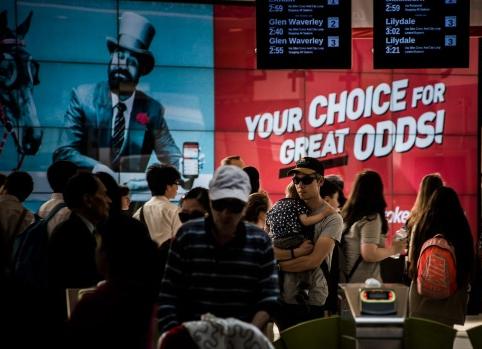
by
Farrah Tomazin
Sports
betting agencies are adopting similar marketing techniques
used by the powerful tobacco lobby to convince people
that online gambling is an intrinsic part of Australian
culture, new research suggests.
s
the Turnbull government prepares to unveil reforms
to crack down on foreign bookmakers, a study has
found that betting giants are increasingly using gender
stereotypes, fan rituals and images of mateship to
"normalise" online wagering through highly targeted
advertisements.
"The same playbook that we saw in tobacco and alcohol is
happening again," said Samantha Thomas, a public health
academic at Deakin University, which led the study.
"It's being depicted in advertising as though it's
part of Aussie culture – this idea that if you're
a true Aussie bloke, you go to the pub, you hang with
your mates, you watch your sport and now you
also gamble on sport as well. We should all be smarter
about the way these companies seek to normalise their
product."
The study analysed 85 advertisements from 11 local
and international gambling companies, including
Ladbrokes, Sportsbet, William Hill, Bet365 and Crownbet.
It found that over three quarters of ads used imagery
relating to sports fan rituals (such as images of
fans cheering for their teams at stadiums or while
watching TV); about half contained symbols of mateship
(such as gambling being something you do with your
friends at the pub); and about a quarter objectified
women (who often appeared in the ads playing a subservient
service role to men).
One Sportsbet
ad for instance, described the bikini as
"one of man's greatest inventions" while a man poked
the breast of a woman in her bathers as she sat by
a pool. Inanother
ad by Betfair, a James Bond-type character
in a suit played table tennis with a woman wearing
a bikini while the voiceover states: "When you have
power, you can do what you want. With whoever you
want, whenever you want, wherever you want, as many
different ways as you want."
The research found 10 main types of "appeal strategies"
were used by betting agencies to market sports wagering,
including sexual imagery; thrill and risk; sports
fan behaviours; mateship; winning; social status;
adventure; patriotism; happiness; and power and control.
But experts say the ads should serve as a cautionary
tale, particularly in the lead up to the Olympics,
which Associate Professor Thomas warned could end
up being "one of the biggest betting events the world
has ever seen".
The research is likely to add to concerns about
cashed up bookmakers pumping millions of dollars into
advertising and corporate sponsorship in
the hope of securing a bigger foothold in the lucrative
sports betting market.
However,
Sportsbet chief financial officer Ben Sleep said he "categorically
rejects any comparison of our business to those of
tobacco companies."
"It
has been proven that every single cigarette does you
harm whereas it is only a very small percentage of
consumers who are at risk of developing an issue with
wagering. Sportsbet is continually developing
world's best practice harm minimisation measures and
strategies to help consumers enjoy our product safely,"
Mr Sleep said.
Standard
Media Index figures show that in the first two months
of this year, the gambling industry had spent $27.3
million on advertising. And as The Age reported
on Saturday, football
fans have been bombarded with ads since the
AFL season opened last week, with more than one in
six ads promoting gambling during round one.
A
spokesperson for the Australian Wagering Council,
which represents the sportsbetting industry,
said the ads informed consumers of the identity
of licensed Australian-based providers so they could
participate in "highly controlled and consumer protected"
betting, while avoiding the dangers of illegal offshore
operators.
"AWC
members recognise community concern in relation to
wagering advertising and agree that advertising
should always conform to accepted social standards, and
not promote harmful behaviour," the spokesperson said.
|