|
How
the Territory pioneered a multi-billion dollar gambling
industry - 15th November 2017



Your
text advertisement here from as little as $100USD
per 12 months
Profiles
Racing
Sports
Sports
Betting Markets
Northern
Territory Alice
Springs Outback
Australia Australia
Television
Music
Movies
Hollywood
WWE
Wrestling
Business
Gaming
Entertainment
Advertising
Promotions
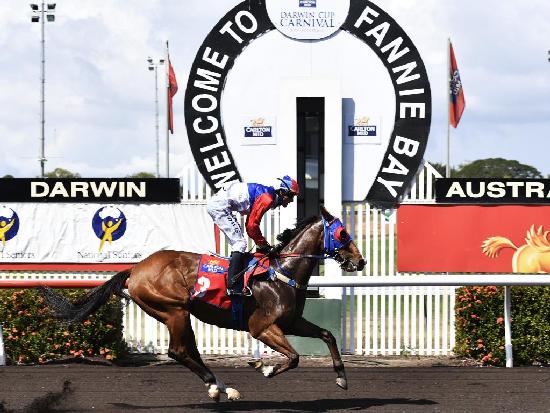
Brandon
Davies takes a win at the Fannie Bay racecourse —
the birthplace of the NT’s lucrative gambling
industry.
by
ASHLEY MANICAROS
SMOKE-FILLED
rooms in suburban shopping centres away from the trackside
racing action were the birthplace of the Territory’s
billion dollar gambling industry.
With
heavy blinds, darkened windows and rarely a woman
to be seen — men would gather on a Saturday afternoon
to place their bets.
You
could buy a beer even though they weren’t licensed
venues.
Weekly
wages were won and lost. After a good day you ate
Chinese that night. It is a long way from the $16
billion gambling industry we have emanating out of
the Northern Territory today.
One
which is now under siege from southern states as they
realise how the vision of others could mean revenue
for them. An irony not lost on one of the prime architects
of the industry, bookmaker Mark Read: “They had
the option of setting this up and they didn’t.”
THE
first steps towards sports betting and the eventual
development of corporate bookmaking took place in
the mid-1980s.
The
Territory had already established itself a casino,
and the betting shops there, while admittedly far
less classy compared to Federal’s Don Hotel,
were ahead of their time and setting the markets for
the rest of Australia.
Bookmaking
in the rest of Australia was a singular affair. Sole
traders at tracks. The big players in the market were
totalisers.
The
real dollars were underground. However, in Darwin,
a bookmaker by the name of Bryan Clark was anything
but discreet. He would boldly stand at Gardens Oval,
the city’s home of Australian rules, and offer
odds on the local NT Football League game of the day,
taking bets from spectators whether they be players,
officials or the local coppers.
It
was an open secret. A bit like the underground casinos
during the 1970s in Sydney where denials of such establishments
were countered by witnesses seeing roulette wheels
being lifted with cranes into the third floor of buildings.

Pioneering
Alice Springs bookmaker Terry Lillis
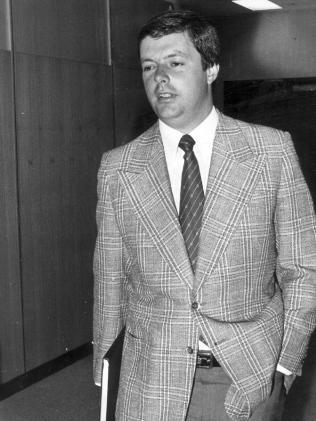
Bookie
Mark Read in his high-flying heyday
Clark’s
list of clientele was extensive enough that he would
avoid breaching the rules through a network of tip
offs, frustrating officials but also driving government
action.
By
the mid-to-late 1980s, enough was enough, and the
Perron Country Liberal Government set about legitimising
what Clark and others were doing. After all, he had
been at it for up to five years unregulated.
In
his book, Living on the Edge: The Story of Terry Lillis
and Centrebet, Alice Springs bookmaker Terry Lillis,
who held book at the Melbourne Cup at Flemington on
Tuesday, describes those early days.
Lillis
would be one of two to be issued sports betting licenses,
leading to the change of the wagering landscape. A
third player, and Australia’s largest bookmaker
Mark Read, would go on to create the monolithic corporate
bookmaking industry we see today.
“
... the first steps began when Tony Franklin, a licensed,
on course Darwin racing bookmaker, began taking bets
on the Australian Football League games,” Lillis
writes.
Franklin
had the Stuart Park betting shop.
“He
was in front of everybody in this respect. The only
problem was taking bets on Victorian footy games was
an unlicensed activity.
“But
he was able to get away with it for several years
without anyone taking much notice ... eventually Clark
took over and it started to get a fair amount of publicity
or perhaps notoriety. And I think at that point the
Territory Government said: ‘Hang on, we’re
gonna end up in the s**t again if we don’t do
something’.”
In
1992, under the guise of then Chief Minister Marshall
Perron and Treasurer Barry Coulter, who also happened
to be the Racing Minister, two licenses were issued.
Lillis
received one after badgering his local member, Alice
Springs MLA Roger Vale, arguing the Berrimah Line,
the invisible colloquial gap between Darwin and the
Red Centre, should not further discriminate against
him, especially given he was the largest bookmaker
in the NT at that time. The other went to Clark.
Being
based in Alice Springs determined the name of his
sports betting company, and Centrebet was born. The
name still operates today from the Territory.
AROUND
this point, leading bookmaker Mark Read came on the
radar of pollies Perron and Coulter.
It
was 1995, before the mainstream birth of the internet.
Read was a driven, established bookmaker and entrepreneur
so he fitted nicely into how the Territory viewed
itself.
Before
he came to the NT he had already made a name for himself.
At
the age of 26, at Flemington, he had held more than
the tote on Derby Day. At the age of 30 he would tackle
the single largest betting market in Australia, Sydney,
where his list of clients would include the late media
magnate Kerry Packer.
Packer
himself was a regular to Darwin to gamble at the casino.
Read
had just spent two years negotiating with the ACT
Government on establishing a sportsbetting enterprise.
The election of the ACT Carnell Government and a robust
lobbying effort by local bookmakers had Read look
elsewhere. “I recognised bookmaking was gone,”
Read, now 67, said this week.
In
Melbourne and Sydney they had started privatising
the totalisators — the equal distribution of
pools among punters.
“TAB
Corp and TAB Limited were protected species and they
were set up as an oligopoly. To make them even more
attractive they were given rights to gaming and slot
machines,” Read said.
“The
bookmakers on the track were completely corralled
and restricted to the point where they had to do everything
themselves, from write the ticket to change the board
odds. So I went to the NT and met Coulter — minister
for all things — a remarkable can-do person.
“My
business plan revealed numbers they could not get
their mind around. I gave them a guarantee I could
attract business just from my own client base. I’d
been bookmaking for 25 years anyway.
“I
was unique in that I would take bets and have bets.
I was a trader through the totaliser system —
in New South Wales I put $30 million a year through
and the jockey club got 10 per cent of that.
“It
was a major opportunity for the Darwin Turf Club and
they had the position where they could pocket a percentage
of whatever was done on the tote.” Read’s
International All Sports started operating in Darwin
in December of 1995. He brought 12 staff, 12 computers
and his wife Shari to town.
They
would operate from the Laurels Bar dance floor at
the Fannie Bay racetrack seven days a week, packing
and unpacking their equipment everyday due to the
night-time functions.
Eventually
they got their own administration area at Fannie Bay,
but it was a far cry from the salubrious surroundings
of the Brett Dixon building now. It was the starting
point and not the end game.
The
end game was the corporatisation of bookmakers —
a move which would grow the industry and the revenue
opportunities for the minnow NT. In the first year,
IAS turned over $25 million. Within three years they
were doing $150 million.
IAS
was issued the first corporate license in 1996. By
1999, Read had taken his bookmaking business public.
“By corporatising you then had people like Terry
Lillis — one of the greatest entrepreneurs I
have ever encountered — pioneering the industry
and putting Alice Springs on the map,” Read said.
“You
also had Clark who was a colourful racing identity.”
And
then came the internet.
“When
we went to Darwin there was no communications. We
may as well have been in Afghanistan,” Read said.
He recruited from around the world to sell the need
on investing in fibre optic to the racetrack. Once
again, it was Coulter who could see the potential
for the NT.
“I
was besotted by the internet but it took another five
years for it to pay for itself,” Read admits.
“The marketplace wasn’t ready for it and
the banks weren’t ready for it.”
There
was no public financial clearance systems to deal
with e-commerce in Australia.
THE
internet turned the wagering world on its head, exploding
turnover.
In
IAS’s case alone, it went from $200 million to
$1 billion in just three years to 2004. Read employed
180 people — 120 of those in the Rialto Building
in Melbourne, the remainder in Darwin to meet licensing
requirements. With success came greater obstacles
as the totalisers, not dissimilar to the objections
being raised now, started to be put in place and pressure
governments.
“Kerry
Packer had been a friend of mine and bet with me since
the mid-70s and I was basically using his platforms
to get our message out there,” Read recalls.
“He owned Sky Channel and I would advertise on
the channel Read’s Ratings.
“When
Kerry sold Sky Channel to TAB Corp they barred me.
Free trade between states — they don’t give
a f**k. All TAB Corp and TAB Limited wanted was to
destroy everything coming out of the Territory.
“Doing
business in the Territory was a nightmare. The cost
of running a business. The cost of employing your
staff. They had the option of setting this up and
they didn’t.”
Far
from its smoke-filled backrooms the industry has grown
to an almost unimaginable size.
Last
year the Territory received $5.5 million in tax from
corporate bookmakers and expect similar receipts in
2017-18.
But
while that figure looks small, it is the employment
and other government revenue which makes them vital
to the region. Corporate bookmakers employ more than
380 Territory staff and provide more than $42 million
in broader economic benefits including taxes, sponsorships,
product fees, rent and Aboriginal employment programs.
Bookmaking
turnover has increased from $3.6 billion in 2006-07
to $16.1 billion in 2016-17.
States
are now talking about putting in place a point of
sale gambling tax. WA is talking about a 10 per cent
tax. Read said more taxation would damage the industry.
“When
they want to attack the bookmakers in the Territory
what they are doing is attacking the golden goose,”
he said. “They think by attacking that they will
get more turnover for themselves. But they won’t
because they won’t compete — you won’t
see the TAB’s giving away anything.
“Corporate
bookmaking has created huge rivers of wealth in sponsorship
and promotion. The corporate bookmakers are the only
ones educating new punters. There would be no growth
without the corporate bookmaking industry.”
(NT
News)
|