|
Stoicism
Directory
Feature
Daily
Stoic | Stoic Wisdom For Everyday Life

Daily
Stoic Podcast( YouTube)
Stoicism
for everyday life.
For
those of us who live our lives in the real world,
there is one branch of philosophy created just for
us: Stoicism. It’s a philosophy designed to make
us more resilient, happier, more virtuous and more
wise–and as a result, better people, better parents
and better professionals. Stoicism has been a common
thread though some of history’s great leaders...
Video
What
is Stoicism? | Daily Stoic (YouTube)
Ryan
Holiday, the bestselling author of The Daily Stoic,
The Obstacle Is The Way, Ego is the Enemy and other
books, provides an overview of the practical philosophy
of Stoicism.
Daily
Stoic is a community built around the teachings of
Stoicism. If you're wondering "What does Stoicism
mean?", "Who was Marcus Aurelius?",
"How to be a stoic?" or "How to practice
stoicism in daily life?" check out the Daily
Stoic:
Stoicism
is a practical philosophy, meaning it doesn’t
concern itself with complicated theories about the
world, but with helping us overcome destructive emotions
and act on what can be acted upon. It’s built
for action, not endless debate. The main thinkers
that the Daily Stoic focuses on in stoicism are Marcus
Aurelius, Epictetus, and Seneca.
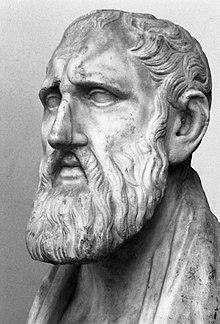
Zeno
of Citium
News
Rick
Rubin - Tetragrammaton wins Media Man 'Creativity
Podcast Of The Month' award

Stoicism
is a school of Hellenistic philosophy that flourished
in Ancient Greece and Ancient Rome. The Stoics believed
that the practice of virtue is enough to achieve eudaimonia:
a well-lived life. The Stoics identified the path
to achieving it with a life spent practicing the four
virtues in everyday life: wisdom, courage, temperance
or moderation, and justice, and living in accordance
with nature. It was founded in the ancient Agora of
Athens by Zeno of Citium around 300 BC.
Alongside
Aristotle's ethics, the Stoic tradition forms one
of the major founding approaches to virtue ethics.
The Stoics are especially known for teaching that
"virtue is the only good" for human beings,
and that external things, such as health, wealth,
and pleasure, are not good or bad in themselves (adiaphora)
but have value as "material for virtue to act
upon". Many Stoics—such as Seneca and Epictetus—emphasized
that because "virtue is sufficient for happiness",
a sage would be emotionally resilient to misfortune.
The Stoics also held that certain destructive emotions
resulted from errors of judgment, and they believed
people should aim to maintain a will (called prohairesis)
that is "in accordance with nature". Because
of this, the Stoics thought the best indication of
an individual's philosophy was not what a person said
but how a person behaved ] To live a good life, one
had to understand the rules of the natural order since
they believed everything was rooted in nature.
Stoicism
flourished throughout the Roman and Greek world until
the 3rd century AD, and among its adherents was Emperor
Marcus Aurelius. It experienced a decline after Christianity
became the state religion in the 4th century AD. Since
then, it has seen revivals, notably in the Renaissance
(Neostoicism) and in the contemporary era (modern
Stoicism).
(Wikipedia)
Passions
The
Stoics arranged the passions under four headings:
distress, pleasure, fear and lust. One report of the
Stoic definitions of these passions appears in the
treatise On Passions by Pseudo-Andronicus (trans.
Long & Sedley, pg. 411, modified):
Distress
(lupe): Distress is an irrational contraction, or
a fresh opinion that something bad is present, at
which people think it right to be depressed.
Fear
(phobos): Fear is an irrational aversion, or avoidance
of an expected danger.
Lust
(epithumia): Lust is an irrational desire, or pursuit
of an expected good but in reality bad.
Delight
(hedone): Delight is an irrational swelling, or a
fresh opinion that something good is present, at which
people think it right to be elated.
Two
of these passions (distress and delight) refer to
emotions currently present, and two of these (fear
and lust) refer to emotions directed at the future.Thus
there are just two states directed at the prospect
of good and evil, but subdivided as to whether they
are present or future: Numerous subdivisions of the
same class were brought under the head of the separate
passions:
Distress:
Envy, Rivalry, Jealousy, Compassion, Anxiety, Mourning,
Sadness, Troubling, Grief, Lamenting, Depression,
Vexation, Despondency.
Fear:
Sluggishness, Shame, Fright, Timidity, Consternation,
Pusillanimity, Bewilderment, and Faintheartedness.
Lust:
Anger, Rage, Hatred, Enmity, Wrath, Greed, and Longing.
Delight:
Malice, Rapture, and Ostentation.
The wise person (sophos) is someone who is free from
the passions (apatheia). Instead the sage experiences
good-feelings (eupatheia) which are clear-headed.
These emotional impulses are not excessive, but nor
are they diminished emotions. Instead they are the
correct rational emotions] The Stoics listed the good-feelings
under the headings of joy (chara), wish (boulesis),
and caution (eulabeia).] Thus if something is present
which is a genuine good, then the wise person experiences
an uplift in the soul—joy (chara).] The Stoics
also subdivided the good-feelings:
Joy:
Enjoyment, Cheerfulness, Good spirits
Wish: Good intent, Goodwill, Welcoming, Cherishing,
Love
Caution: Moral shame, Reverence
Suicide
The Stoics accepted that suicide was permissible for
the wise person in circumstances that might prevent
them from living a virtuous life, such as if they
fell victim to severe pain or disease,[45] but otherwise
suicide would usually be seen as a rejection of one's
social duty.[46] For example, Plutarch reports that
accepting life under tyranny would have compromised
Cato's self-consistency (constantia) as a Stoic and
impaired his freedom to make the honorable moral choices.
Love
and sexuality
Early Stoics differed significantly from late Stoics
in their views of sexuality, romantic love and sexual
relationships. Zeno first advocated for a republic
ruled by love and not by law, where marriage would
be abolished, wives would be held in common, and eroticism
would be practiced with both boys and girls with educative
purposes, to develop virtue in the loved ones.] However,
he did not condemn marriage per se, considering it
equally a natural occurrence. He regarded same sex
relationships positively, and maintained that wise
men should "have carnal knowledge no less and
no more of a favorite than of a non-favorite, nor
of a female than of a male."
Zeno
favored love over desire, clarifying that the ultimate
goal of sexuality should be virtue and friendship.
Among later stoics, Epictetus maintained homosexual
and heterosexual sex as equivalent in this field,and
condemned only the kind of desire that led one to
act against judgement. However, contemporaneous positions
generally advanced towards equating sexuality with
passion, and although they were still not hostile
to sexual relationships by themselves, they nonetheless
believed those should be limited in order to retain
self-control. Musonius espoused the only natural kind
of sex was that meant for procreation, defending a
companionate form of marriage between man and woman,
and considered relationships solely undergone for
pleasure or affection as unnatural.
What
Is Stoicism? A Definition & 9 Stoic Exercises
To Get You Started
Stoic
Exercises, Wisdom, and More
For
those of us who live our lives in the real world,
there is one branch of philosophy created just for
us: Stoicism. It’s a philosophy designed to make
us more resilient, happier, more virtuous and more
wise–and as a result, better people, better parents
and better professionals.
Stoicism
has been a common thread though some of history’s
great leaders. It has been practiced by Kings, presidents,
artists, writers and entrepreneurs. Marcus Aurelius.
Frederick the Great, Montaigne, George Washington,
Thomas Jefferson, Adam Smith, John Stuart Mill, Theodore
Roosevelt, General James Mattis, —just to name
a few—were all influenced by Stoic philosophy.
So
what is Stoicism? Who were the Stoics? How can you
be a Stoic? We answer all your questions and more
below. Click the links below to navigate to a specific
section or scroll and read the entirety of the page:
I.
What Is Stoicism?
“Of all people only those are at leisure who
make time for philosophy, only they truly live. Not
satisfied to merely keep good watch over their own
days, they annex every age to their own. All the harvest
of the past is added to their store. ” —
Seneca
The
private diaries of one of Rome’s greatest emperors,
the personal letters of one of Rome’s best playwrights
and wisest power brokers, the lectures of a former
slave and exile, turned influential teacher. Against
all odds, some two millennia later, these incredible
documents survive. They contain some of the greatest
wisdom in the history of the world and together, they
constitute the bedrock of what is known as Stoicism—an
ancient philosophy that was once one of the most popular
civic disciplines in the West, practiced by the rich
and the impoverished, the powerful and the struggling
alike in the pursuit of the Good Life.
Except
to the most avid seekers of wisdom, Stoicism is either
unknown or misunderstood. To the average person, this
vibrant, action-oriented, and paradigm-shifting way
of living has become shorthand for “emotionlessness.”
Given the fact that the mere mention of philosophy
makes most nervous or bored, “Stoic philosophy”
on the surface sounds like the last thing anyone would
want to learn about, let alone urgently need in the
course of daily life.
It
would be hard to find a word that dealt a greater
injustice at the hands of the English language than
“Stoic.” In its rightful place, Stoicism
is a tool in the pursuit of self-mastery, perseverance,
and wisdom: something one uses to live a great life,
rather than some esoteric field of academic inquiry.
Certainly, many of history’s great minds not
only understood Stoicism for what it truly is, they
sought it out: George Washington, Walt Whitman, Frederick
the Great, Eugène Delacroix, Adam Smith, Immanuel
Kant, Thomas Jefferson, Matthew Arnold, Ambrose Bierce,
Theodore Roosevelt, William Alexander Percy, Ralph
Waldo Emerson. Each read, studied, quoted, or admired
the Stoics. The ancient Stoics themselves were no
slouches. The names you encounter on this site in
our daily email meditations—Marcus Aurelius,
Epictetus, Seneca—belonged to, respectively,
a Roman emperor, a former slave who triumphed to become
an influential lecturer and friend of the emperor
Hadrian, and a famous playwright and political adviser.
What
have all these and countless other great men and women
found within Stoicism that others missed? A great
deal. Primarily, that it provides much needed strength,
wisdom, and stamina for all of life’s challenges.
II.
How Did Stoicism Begin?
Around 304 BC, a merchant named Zeno was shipwrecked
on a trading voyage. He lost nearly everything. Making
his way to Athens, he was introduced to philosophy
by the Cynic philosopher Crates and the Megarian philosopher
Stilpo, which changed his life. As Zeno later joked,
“I made a prosperous voyage when I suffered shipwreck.”
He would later move to what became known as the Stoa
Poikile, literally meaning “painted porch.”
Erected in the 5th century BC—the ruins of it
are visible still, some 2,500 years later—the
painted porch is where Zeno and his disciples gathered
for discussion. While his followers were originally
called Zenonians, it is the ultimate credit to Zeno’s
humility that the philosophical school he founded,
unlike nearly every school and religion before or
since, didn’t ultimately carry his name.
III.
Who Were The Stoic Philosophers?
Agasicles, king of the Spartans, once quipped that
he wanted to be “the student of men whose son
I should like to be as well.” It is a critical
consideration we need to make in our search for role
models. Stoicism is no exception. Before we begin
our studies we need to ask ourselves: Who are the
people that followed these precepts? Who can I point
out as an example? Am I proud to look up to this person?
Do I want to be more like them?
The
Roman Emperor Marcus Aurelius, the playwright and
political advisor Seneca, and the slave turned prominent
teacher Epictetus—these are the three Stoics
you need to get to know first. Once you do, we’re
confident you will want to follow in their footsteps.
Who
Is Marcus Aurelius?
“Alone of the emperors,” the historian Herodian
would write of the man who became known to us as Marcus
Aurelius, “he gave proof of his learning not
by mere words or knowledge of philosophical doctrines
but by his blameless character and temperate way of
life.” Cassius Dio: “In addition to possessing
all the other virtues, he ruled better than any others
who had ever been in any position of power.”
Born
April 26th, 121, nobody would have predicted that
Marcus Catilius Severus Annius Verus would one day
be Emperor of the Roman Empire. The emperor Hadrian,
who would have known young Marcus through his early
academic accomplishments, sensing his potential, kept
an eye on the boy. His nickname for Marcus, whom he
liked to go hunting with, was Verissimus—a play
on his name Verus—the truest one. What exactly
Hadrian saw in Marcus is unclear. But by Marcus’s
17th birthday, Hadrian had begun planning something
extraordinary.
He
was going to make Marcus Aurelius the emperor of Rome.
On
February 25th, 138, Hadrian adopted a 51 year old
man named Antoninus Pius on the condition that he
in turn adopted Marcus Aurelius. Given life-expectancy
statistics of the time, Hadrian figured this regent
and mentor might be at the helm in five years. All
was well, except Antoninus lived and ruled for twenty
three years.
In
161, as Antoninus died and ended one of the longest
reigns, Marcus finally became the Emperor of the Roman
Empire and ruled for nearly two decades until his
death in 180. His reign wasn’t easy: wars with
the Parthian Empire, the barbarian tribes menacing
the Empire on the northern border, the rise of Christianity,
as well as the plague that left millions dead.
The
famous historian Edward Gibbon wrote that under Marcus,
the last of the ‘Five Good Emperors,’ “the
Roman Empire was governed by absolute power, under
the guidance of wisdom and virtue”. The guidance
of wisdom and virtue. That’s what separates Marcus
from the majority of past and present world leaders.
Just look at the journal that he left behind, which
is now known as his Meditations: the private thoughts
of the most powerful man in the world, admonishing
himself on how to be more virtuous, more just, more
immune to temptation, wiser.
And
for Marcus, Stoicism provided a framework for dealing
with the stresses of daily life as a leader of one
of the most powerful empires in human history.
Who
Is Seneca?
Born around 4BC in Corduba, Spain, the son of a wealthy
and learned writer known to history as Seneca the
Elder, Seneca the Younger was destined for great things
from birth. Seneca’s father selected Attalus
the Stoic to tutor his boy, primarily for his reputation
as a man of great eloquence. His son took to education
with gusto—by Seneca’s own telling, he cheerfully
“laid siege” to the classroom and was the
first to arrive and last to leave it. The most powerful
lesson that Seneca learned from Attalus was on the
desire to improve practically, in the real world.
The purpose of studying philosophy, Seneca learned
from his beloved instructor, was to “take away
with him some one good thing every day: he should
return home a sounder man, or on the way to becoming
sounder.”
While
his commitment to self-improvement was beloved by
his teachers, they also knew that his father—no
fan of philosophy—was paying them to train his
son for an active and ambitious political career.
In Rome, a promising young lawyer could appear in
court as early as age 17, and there is little doubt
that Seneca was one…but, only in his early twenties,
Seneca’s health nearly cut it all short. A lung
condition forced him to take an extended trip to Egypt
to recover where he would spend nearly a decade writing,
reading, and building up his strength.
He
returned to Rome at 35 in 31 AD—a time of paranoia
and violence and corruption and political turmoil.
Seneca kept his head down for the most part throughout
the equally terrifying reigns of Tiberius and Caligula.
His life took a sharp turn in 41 A.D. when Claudius
became the emperor and exiled Seneca to the island
of Corsica. It would be another eight years away from
Rome—and although he started productively (writing
Consolation to Polybius, Consolation to Helvia and
On Anger in a short span), the many writing consolations
soon needed some consoling himself. So began his practice
of letter writing, which would continue all his life.
Eight
years later, in another sharp turn, Agrippina, mother
of future emperor Nero and wife of Claudius recalled
Seneca from exile to become her son’s tutor and
adviser. At 53 years old, Seneca is suddenly elevated
to the center of life in the Roman imperial court—a
whirlwind of events that history still hasn’t
wrapped its head around. In the end, Seneca made only
minimal impact on Nero, a man whom time would shortly
reveal to be deranged. Was it always a hopeless mission?
Probably. But all a Stoic can do is show up and do
our work. Seneca believed he had an obligation. As
he would later write, the difference between the Stoics
and the Epicureans is that the Stoics felt that politics
was a duty.
Who
Is Epictetus?
While Seneca would speak, with surprising relatability,
about slave owners who became owned by the responsibility
and management of their slaves or other Stoics would
congratulate themselves for their humane treatment
of their human chattel, Epictetus actually was one.
His
given name is not known. Epictetos is Greek meaning
“acquired.” Epictetus was born into slavery.
Epictetus’ mention of his owner, Epaphroditus,
is surprisingly neutral because we know Epaphroditus
was cruel even by Roman standards. Later Christian
writers tell us that Epictetus’s master was violent
and depraved, at one point twisting Epictetus’s
leg with all his might. As a punishment? As a sick
pleasure? In a wrestling match? Trying to get a disobedient
young kid to follow instructions? We don’t know.
All we hear is that Epictetus calmly warned him about
taking it too far. When the leg snapped, Epictetus
made no sound, he uttered no tears. He smiled and
looked at his master and said, “Didn’t I
warn you?”
For
the rest of his life, Epictetus would walk with a
limp. But Epictetus remained unbroken by the incident.
“Lameness is an impediment to the leg,”
he would later say, “but not to the will.”
Epictetus would choose to see his disability as only
a physical impairment, and in fact it was that idea
of choice that defined the core of his philosophical
beliefs. Life was like a play, he liked to say, and
if it was the playwrights “pleasure you should
act a poor man, a cripple, a governor, or a private
person, see that you act it naturally. For this is
your business, to act well the character assigned
you; to choose it is another’s.”
And
so he did.
Law
established by Augustus in 4AD determined that slaves
could not be freed before their 30th birthday. Epictetus
didn’t obtain his freedom until shortly after
emperor Nero’s death. He chose to dedicate himself
fully to philosophy and taught in Rome for nearly
25 years…Until the emperor Domitian famously
banished all philosophers in Rome. Epictetus fled
to Nicopolis in Greece where he founded a philosophy
school and taught until his death.
IV.
What Are The 4 Virtues of Stoicism?
Courage.
Temperance.
Justice.
Wisdom.
They
are the most essential values in Stoic philosophy.
“If, at some point in your life,” Marcus
Aurelius wrote, “you should come across anything
better than justice, truth, self-control, courage—it
must be an extraordinary thing indeed.” That
was almost twenty centuries ago. We have discovered
a lot of things since then—automobiles, the Internet,
cures for diseases that were previously a death sentence—but
have we found anything better?
…than
being brave
…than
moderation and sobriety
…than
doing what’s right
…than
truth and understanding?
No,
we have not. It’s unlikely we ever will. Everything
we face in life is an opportunity to respond with
these four traits:
Courage
If you’ve read Cormac McCarthy’s dark and
beautiful novel All the Pretty Horses, you’ll
remember the key question that Emilio Perez asks John
Grady, one that cuts to the core of life and what
we all must do to live a life worth living.
“The
world wants to know if you have cojones. If you are
brave?”
The
Stoics might have phrased this a bit differently.
Seneca would say that he actually pitied people who
have never experienced misfortune. “You have
passed through life without an opponent,” he
said, “No one can ever know what you are capable
of, not even you.”
The
world wants to know what category to put you in, which
is why it will occasionally send difficult situations
your way. Think of these not as inconveniences or
even tragedies but as opportunities, as questions
to answers. Do I have cojones? Am I brave? Am I going
to face this problem or run away from it? Will I stand
up or be rolled over?
Let
your actions etch a response into the record—and
let them remind you of why courage is the most important
thing.
Temperance
Of course, life is not so simple as to say that courage
is all the counts. While everyone would admit that
courage is essential, we are also all well aware of
people whose bravery turns to recklessness and becomes
a fault when they begin to endanger themselves and
others.
This
is where Aristotle comes in. Aristotle actually used
courage as the main example in his famous metaphor
of a “Golden Mean.” On one end of the spectrum,
he said, there was cowardice—that’s a deficiency
of courage. On the other, there was recklessness—too
much courage. What was called for, what we required
then, was a golden mean. The right amount.
That’s
what Temperance or moderation is about: Doing nothing
in excess. Doing the right thing in the right amount
in the right way. Because “We are what we repeatedly
do,” Aristotle also said, “therefore excellence
is not an act, but a habit.”
In
other words: Virtue and excellence is a way of living.
It’s foundational. It’s like an operating
system and the code this system operates on is habit.
As
Epictetus would later say, “capability is confirmed
and grows in its corresponding actions, walking by
walking, and running by running… therefore, if
you want to do something, make a habit of it.”
So if we want to be happy, if we want to be successful,
if we want to be great, we have to develop the capability,
we have to develop the day-to-day habits that allow
this to ensue.
This
is great news. Because it means that impressive results
or enormous changes are possible without herculean
effort or magic formulas. Small adjustments, good
systems, the right processes—that’s what
it takes.
P.S.
Daily Stoic sifted through the greatest Stoic wisdom
and aimed it at one of the most challenging parts
of life: habit formation and growth. Check out Daily
Stoic Habits for Success, Habits for Success Challenge!
Challenge yourself to change what you “repeatedly
do.” We are promising that if you can do that,
you can achieve excellence—personally and professionally.
Justice
Being brave. Finding the right balance. These are
core Stoic virtues, but in their seriousness, they
pale in comparison to what the Stoics worshipped most
highly: Doing the right thing.
There
is no Stoic virtue more important than justice, because
it influences all the others. Marcus Aurelius himself
said that justice is “the source of all the other
virtues.” Stoics throughout history have pushed
and advocated for justice, oftentimes at great personal
risk and with great courage, in order to do great
things and defend the people and ideas that they loved.
Cato
gave his life trying to restore the Roman Republic.
And Thrasea and Agrippinus gave theirs resisting the
tyranny of Nero.
George Washington and Thomas Jefferson formed a new
nation—one which would seek, however imperfectly,
to fight for democracy and justice—largely inspired
by the philosophy of Cato and those other Stoics.
Thomas Wentworth Higginson, a translator of Epictetus,
led a black regiment of troops in the US Civil War.
Beatrice Webb, who helped to found the London School
of Economics and who first conceptualized the idea
of collective bargaining, regularly re-read Marcus
Aurelius.
Countless other activists and politicians have turned
to Stoicism to gird them against the difficulty of
fighting for ideals that mattered, to guide them towards
what was right in a world of so much wrong. A Stoic
must deeply believe that an individual can make a
difference. Successful activism and political maneuvering
require understanding and strategy, as well as realism…
and hope. It requires wisdom, acceptance and also
a refusal to accept the statue quo.
It
was James Baldwin who most brilliantly captured this
tension in Notes of a Native Son:
It
began to seem that one would have to hold in mind
forever two ideas which seemed to be in opposition.
The first idea was acceptance, the acceptance, totally
without rancor, of life as it is, and men as they
are: in light of this idea it goes without saying
that injustice is commonplace. But this did not mean
that one could be complacent, for the second idea
was of equal power: that one must never, in one’s
own life, accept these injustices as commonplace but
one must fight them with all one’s strength.
A
Stoic sees the world clearly…but also sees clearly
what the world can be. And then they are brave, and
strategic enough to help bring it into reality.
Wisdom
Courage. Temperance. Justice. These are the critical
virtues of life. But what situations call for courage?
What is the right amount? What is the right thing?
This is where the final and essential virtue comes
in: Wisdom. The knowing. The learning. The experience
required to navigate the world.
Wisdom
has always been prized by the Stoics. Zeno said that
we were given two ears and one mouth for a reason:
to listen more than we talk. And since we have two
eyes, we are obligated to read and observe more than
we talk as well.
It
is key today, as it was in the ancient world, to be
able to distinguish between the vast aggregations
of information that lay out there at your disposal—and
the actual wisdom that you need to live a good life.
It’s key that we study, that we keep our minds
open always. You cannot learn that which you think
you already know, Epictetus said. It’s true.
Which
is why we need to not only be humble students but
also seek out great teachers. It’s why we should
always be reading. It’s why we cannot stop training.
It’s why we have to be diligent in filtering
out the signal from the noise.
The
goal is not just to acquire information, but the right
kind of information. It’s the lessons found in
Meditations, in everything from the actual Epictetus
to James Stockdale entering the world of Epictetus.
It’s the key facts, standing out from the background
noise, that you need to absorb.
Thousands
of years of blazing insight are available to the world.
It is likely that you have the power to learn anything
you want at your fingertips. So today, honor the Stoic
virtue of wisdom by slowing down, being deliberate,
and finding the wisdom you need.
Two
eyes, two ears, one mouth. Remain a student. Act accordingly—and
wisely.
P.S.
If you’re looking to be a better reader—to
build a real reading practice—the Stoics can
help. We built out some of their best insights into
our Daily Stoic: Read-to-Lead Reading Challenge. It’s
going to walk you through more than a dozen actionable
challenges that will help you elevate your game as
a reader, learn how to think more critically and discover
important books that will change your life. We’ve
got videos and worksheets and all sorts of recommendations
and strategies for you. If you’ve liked any of
our other courses, you’ll love this one—it’s
awesome, it’s actionable and it will help you
get a better ROI out of one of the most important
ways we spend our time and enrich our minds. Give
it a shot.
V.
What Are The Best Books On Stoicism?
Meditations by Marcus Aurelius
Meditations
is perhaps the only document of its kind ever made.
It is the private thoughts of the world’s most
powerful man giving advice to himself on how to make
good on the responsibilities and obligations of his
positions. Marcus stopped almost every night to practice
a series of spiritual exercises—reminders designed
to make him humble, patient, empathetic, generous,
and strong in the face of whatever he was dealing
with. You cannot read this book and not come away
with a phrase or a line that will be helpful to you
next time you are in trouble. Read it, it is practical
philosophy embodied.
Letters
From A Stoic by Seneca
While
Marcus wrote mainly for himself, Seneca had no trouble
advising and aiding others. In fact, that was his
job—he was Nero’s tutor, tasked with reducing
the terrible impulses of a terrible man. His advice
on grief, on wealth, on power, on religion, and on
life are always there when you need them. Seneca’s
letters are the best place to start, but the essays
in On the Shortness of Life are excellent as well.
Discourses
by Epictetus
That
Epictetus’ teachings survive to us is remarkable.
It is only thanks to a student named Arrian, who’s
credited with transcribing the lessons he learned
in Epictetus’ classroom at the beginning of the
second century AD. Arrian wrote in a letter prior
to the Discourses’ publishing, “whatever
I used to hear him say I wrote down, word for word,
as best I could, as a record for later use of his
thought and frank expression.” Arrian would use
those lessons to achieve renown throughout Rome as
a political advisor, military commander, and prolific
author. Interestingly, in the first book of Meditations,
titled “Debts and Lessons,” Marcus thanks
one of his philosophy teachers, Rusticus, “for
introducing me to Epictetus’s lectures –
and loaning me his own copy.”
The
Daily Stoic by Ryan Holiday and Stephen Hanselman
The
Daily Stoic: 366 Meditations on Wisdom, Perseverance,
and the Art of Living features not only 366 all-new
translations of brilliant stoic passages but 366 exciting
stories, examples and explanations of the stoic principles
from Marcus Aurelius, Seneca and Epictetus but also
some of the lesser known but equally wise stoics from
Zeno to Cleanthes to Chrysippus. The book takes the
reader on a daily journey through practical, pragmatic
philosophy. Each day offers a new stoic insight and
exercise. By following these teachings, you’ll
find the serenity, self-knowledge and resilience you
need to live well.
The Obstacle Is the Way by Ryan Holiday
Inspired
by Stoicism and the maxim from Marcus Aurelius—“The
impediment to action advances action. What stands
in the way becomes the way”—The Obstacle
Is The Way is a primer of the key principles for thriving
under pressure. Through historical examples of great
men and women, it teaches us how to overcome adversity
and difficulties, turn obstacles upside down, and
shows us how to love our fate, no matter what it might
bring. The book has become a cult classic with coaches
and athletes alike and has been featured in prominent
outlets like Sports Illustrated and ESPN.
VI.
How To Be A Stoic: 9 Stoic Exercises To Get You Started
1. The Dichotomy Of Control
“The chief task in life is simply this: to identify
and separate matters so that I can say clearly to
myself which are externals not under my control, and
which have to do with the choices I actually control.
Where then do I look for good and evil? Not to uncontrollable
externals, but within myself to the choices that are
my own . . .” Epictetus
The
single most important practice in Stoic philosophy
is differentiating between what we can change and
what we can’t. What we have influence over and
what we do not. A flight is delayed because of weather—
no amount of yelling at an airline representative
will end a storm. No amount of wishing will make you
taller or shorter or born in a different country.
No matter how hard you try, you can’t make someone
like you. And on top of that, time spent hurling yourself
at these immovable objects is time not spent on the
things we can change.
Return
to this question daily—in each and every trying
situation. Journal and reflect on it constantly. If
you can focus on making clear what parts of your day
are within your control and what parts are not, you
will not only be happier, you will have a distinct
advantage over other people who fail to realize they
are fighting an unwinnable battle.
2.
Journal
“Few care now about the marches and countermarches
of the Roman commanders. What the centuries have clung
to is a notebook of thoughts by a man whose real life
was largely unknown who put down in the midnight dimness
not the events of the day or the plans of the morrow,
but something of far more permanent interest, the
ideals and aspirations that a rare spirit lived by.”
— Brand Blanshard
Epictetus
the slave. Marcus Aurelius the emperor. Seneca the
power broker and playwright. These three radically
different men led radically different lives. But they
seemed to have one habit in common: Journaling.
It
would be Epictetus who would admonish his students
that philosophy was something they should “write
down day by day,” that this writing was how they
“should exercise themselves.” Seneca’s
favorite time to journal was in the evenings. When
darkness had fallen and his wife had gone asleep,
he explained to a friend, “I examine my entire
day and go back over what I’ve done and said,
hiding nothing from myself, passing nothing by.”
Then he would go to bed, finding that “the sleep
which follows this self-examination” was particularly
sweet. And Marcus, he was the most prodigious of journalers,
and we are lucky enough that his writings survive
to us, appropriately titled, ?? e?? ?a?t??, Ta eis
heauton, or “to himself.”
In
Stoicism the art of journaling is more than some simple
diary. This daily practice is the philosophy. Preparing
for the day ahead. Reflecting on the day that has
passed. Reminding oneself of the wisdom we have learned
from our teachers, from our reading, from our own
experiences. It’s not enough to simply hear these
lessons once, instead, one practices them over and
over again, turns them over in their mind, and most
importantly, writes them down and feels them flowing
through their fingers in doing so.
Stoicism
is designed to be a practice and a routine. It’s
not a philosophy you read once and magically understand
at the soul-level. No, it’s a lifelong pursuit
that requires diligence and repetition and concentration.
(Pierre Hadot called it spiritual exercising). That’s
one of the benefits of the page-a-day (with monthly
themes) format we organized the Stoics into (and the
weekly themes in The Daily Stoic Journal). It’s
putting one thing up for you to review—to have
at hand—and to fully digest. Not in passing.
Not just once. But every single day over the course
of a year, and preferably year in and year out. And
if Epictetus is right, it’s something you’re
supposed to keep within reach at all times—which
is why a collection of the greatest hits, presented
daily, was so appealing to us.
In
this way, journaling is Stoicism. It’s almost
impossible to have one without the other.
P.S.
Check out The Daily Stoic Journal. It’s an easy
place to start and is built around the Stoic journaling
methods of Marcus Aurelius and Seneca.
3.
Practice Misfortune
“It is in times of security that the spirit should
be preparing itself for difficult times; while fortune
is bestowing favors on it is then is the time for
it to be strengthened against her rebuffs.” —
Seneca
Seneca,
who enjoyed great wealth as the adviser of Nero, suggested
that we ought to set aside a certain number of days
each month to practice poverty. Take a little food,
wear your worst clothes, get away from the comfort
of your home and bed. Put yourself face to face with
want, he said, you’ll ask yourself “Is this
what I used to dread?”
It’s
important to remember that this is an exercise and
not a rhetorical device. He doesn’t mean “think
about” misfortune, he means live it. Comfort
is the worst kind of slavery because you’re always
afraid that something or someone will take it away.
But if you can not just anticipate but practice misfortune,
then chance loses its ability to disrupt your life.
Emotions
like anxiety and fear have their roots in uncertainty
and rarely in experience. Anyone who has made a big
bet on themselves knows how much energy both states
can consume. The solution is to do something about
that ignorance. Make yourself familiar with the things,
the worst-case scenarios, that you’re afraid
of.
Practice
what you fear, whether a simulation in your mind or
in real life. The downside is almost always reversible
or transient.
4.
Train Perceptions
“Choose not to be harmed and you won’t feel
harmed. Don’t feel harmed and you haven’t
been.” — Marcus Aurelius
The
Stoics had an exercise called Turning the Obstacle
Upside Down. What they meant to do was make it impossible
to not practice the art of philosophy. Because if
you can properly turn a problem upside down, every
“bad” becomes a new source of good.
Suppose
for a second that you are trying to help someone and
they respond by being surly or unwilling to cooperate.
Instead of making your life more difficult, the exercise
says, they’re actually directing you towards
new virtues; for example, patience or understanding.
Or, the death of someone close to you; a chance to
show fortitude.
Marcus
Aurelius described it like this:
“The
impediment to action advances action. What stands
in the way becomes the way.”
It
should sound familiar because it is the same thinking
behind Obama’s “teachable moments.”
Right before the election, Joe Klein asked Obama how
he’d made his decision to respond to the Reverend
Wright scandal. He said something like ‘when
the story broke I realized the best thing to do wasn’t
damage control, it was to speak to Americans like
adults.’ And what he ended up doing was turning
a negative situation into the perfect platform for
his landmark speech about race.
The
common refrain about entrepreneurs is that they take
advantage of, even create, opportunities. To the Stoic,
everything is opportunity. The Reverend Wright scandal,
a frustrating case where your help goes unappreciated,
the death of a loved one, none of those are “opportunities”
in the normal sense of the word. In fact, they are
the opposite. They are obstacles. What a Stoic does
is turn every obstacle into an opportunity.
There
is no good or bad to the practicing Stoic. There is
only perception. You control perception. You can choose
to extrapolate past your first impression (‘X
happened.’ –> ‘X happened and now
my life is over.’). If you tie your first response
to dispassion, you’ll find that everything is
simply an opportunity.
Note:
This exercise served as the inspiration behind The
Obstacle Is The Way.
5.
Remember—It’s All Ephemeral
“Alexander the Great and his mule driver both
died and the same thing happened to both.” —
Marcus Aurelius
Marcus
Aurelius wrote to himself a simple and effective reminder
to help him regain perspective and stay balanced:
“Run
down the list of those who felt intense anger at something:
the most famous, the most unfortunate, the most hated,
the most whatever: Where is all that now? Smoke, dust,
legend…or not even a legend. Think of all the
examples. And how trivial the things we want so passionately
are.”
It
is important to note that ‘passion’ here
isn’t the modern usage we’re familiar with
as in enthusiasm or caring about something. As Don
Robertson explains in his book, when the Stoics discuss
overcoming ‘passions’, which they called
patheiai, they refer to the irrational, unhealthy
and excessive desires and emotions. Anger would be
a good example. What is important to remember, and
this is the crucial bit, they seek to replace them
with eupatheiai, such as joy instead of excessive
pleasure.
Returning
to the point of the exercise, it’s simple: remember
how small you are. For that matter, remember how small
most everything is.
Remember
that achievements can be ephemeral, and that your
possession of them is for just an instant.
If
everything is ephemeral, what does matter? Right now
matters. Being a good person and doing the right thing
right now, that’s what matters and that’s
what was important to the Stoics.
Take
Alexander the Great who conquered the known world
and had cities named in his honor. This is common
knowledge. The Stoics would also point out that, once
while drunk, Alexander got into a fight with his dearest
friend, Cleitus, and accidentally killed him. Afterward,
he was so despondent that he couldn’t eat or
drink for three days. Sophists were called from all
over Greece to see what they could do about his grief,
to no avail.
Is
this the mark of a successful life? From a personal
standpoint, it matters little if your name is emblazoned
on a map if you lose perspective and hurt those around
you.
Learn
from Alexander’s mistake. Be humble and honest
and aware. That is something you can have every single
day of your life. You’ll never have to fear someone
taking it from you or, worse still, it taking over
you.
6.Take
The View From Above
“How beautifully Plato put it. Whenever you want
to talk about people, it’s best to take a bird’s-
eye view and see everything all at once— of gatherings,
armies, farms, weddings and divorces, births and deaths,
noisy courtrooms or silent spaces, every foreign people,
holidays, memorials, markets— all blended together
and arranged in a pairing of opposites.” —
Marcus Aurelius
Marcus
would often practice an exercise that is referred
to as “taking the view from above” or “Plato’s
view.” It invites us to take a step back, zoom
out and see life from a higher vantage point than
our own. This exercise—envisioning all the millions
and millions of people, all the “armies, farms,
weddings and divorces, births and deaths”—prompts
us to take perspective and just like the previous
exercise, remind us how small we are. It reorients
us, and as Stoic scholar Pierre Hadot put it, “The
view from above changes our value judgments on things:
luxury, power, war…and the worries of everyday
life become ridiculous.”
Seeing
how small we are in the grand scheme of things is
only one portion of this exercise. The second, more
subtle point, is to tap into what the Stoics call
sympatheia, or a mutual interdependence with the whole
of humanity. As the astronaut Edgar Mitchell, one
of the first people to actually experience a real
‘view from above’ put it, “In outer
space you develop an instant global consciousness,
a people orientation, an intense dissatisfaction with
the state of the world, and a compulsion to do something
about it.” Take a step back from your own concerns
and remind yourself of your duty to others. Take Plato’s
view.
7.
Memento Mori: Meditate On Your Mortality
“Let us prepare our minds as if we’d come
to the very end of life. Let us postpone nothing.
Let us balance life’s books each day. …
The one who puts the finishing touches on their life
each day is never short of time.” Seneca
The
quote from Seneca above takes part of Memento Mori—the
ancient practice of reflection on mortality that goes
back to Socrates, who said that the proper practice
of philosophy is “about nothing else but dying
and being dead.” In his Meditations, Marcus Aurelius
wrote that “You could leave life right now. Let
that determine what you do and say and think.”
That was a personal reminder to continue living a
life of virtue now, and not wait.
Meditating
on your mortality is only depressing if you miss the
point. The Stoics find this thought invigorating and
humbling. It is not surprising that one of Seneca’s
biographies is titled Dying Every Day. After all,
it is Seneca who urged us to tell ourselves “You
may not wake up tomorrow,” when going to bed
and “You may not sleep again,” when waking
up as reminders of our mortality. Or as another Stoic,
Epictetus, urged his students: “Keep death and
exile before your eyes each day, along with everything
that seems terrible— by doing so, you’ll
never have a base thought nor will you have excessive
desire.” Use those reminders and meditate on
them daily—let them be the building blocks of
living your life to the fullest and not wasting a
second.
8.
Premeditatio Malorum
“What is quite unlooked for is more crushing
in its effect, and unexpectedness adds to the weight
of a disaster. This is a reason for ensuring that
nothing ever takes us by surprise. We should project
our thoughts ahead of us at every turn and have in
mind every possible eventuality instead of only the
usual course of events… Rehearse them in your
mind: exile, torture, war, shipwreck. All the terms
of our human lot should be before our eyes.”
— Seneca
The
premeditatio malorum (“the pre-meditation of
evils”) is a Stoic exercise of imagining things
that could go wrong or be taken away from us. It helps
us prepare for life’s inevitable setbacks. We
don’t always get what is rightfully ours, even
if we’ve earned it. Not everything is as clean
and straightforward as we think they may be. Psychologically,
we must prepare ourselves for this to happen. It is
one of the most powerful exercise in the Stoics’
toolkit to build resilience and strength.
Seneca,
for instance, would begin by reviewing or rehearsing
his plans, say, to take a trip. And then, in his head
(or in journaling as we said above), he would go over
the things that could go wrong or prevent it from
happening—a storm could arise, the captain could
fall ill, the ship could be attacked by pirates.
“Nothing
happens to the wise man against his expectation,”
he wrote to a friend. “. . . nor do all things
turn out for him as he wished but as he reckoned—and
above all he reckoned that something could block his
plans.”
By
doing this exercise, Seneca was always prepared for
disruption and always working that disruption into
his plans. He was fitted for defeat or victory.
9.
Amor Fati
“To love only what happens, what was destined.
No greater harmony.” — Marcus Aurelius
The
great German philosopher Friedrich Nietzsche would
describe his formula for human greatness as amor fati—a
love of fate. “That one wants nothing to be different,
not forward, not backwards, not in all eternity. Not
merely bear what is necessary, still less conceal
it….but love it.”
The
Stoics were not only familiar with this attitude but
they embraced it. Two thousand years ago, writing
in his own personal journal which would become known
as Meditations, Emperor Marcus Aurelius would say:
“A blazing fire makes flame and brightness out
of everything that is thrown into it.” Another
Stoic, Epictetus, who as a crippled slave has faced
adversity after adversity, echoed the same: “Do
not seek for things to happen the way you want them
to; rather, wish that what happens happen the way
it happens: then you will be happy.”
It
is why amor fati is the Stoic exercise and mindset
that you take on for making the best out of anything
that happens: Treating each and every moment—no
matter how challenging—as something to be embraced,
not avoided. To not only be okay with it, but love
it and be better for it. So that like oxygen to a
fire, obstacles and adversity become fuel for your
potential.
VII.
What Are The Best Stoic Quotes?
For more Stoic quotes, follow us on Instagram.
“We
are often more frightened than hurt; and we suffer
more from imagination than from reality.” —
Seneca
“It’s
silly to try to escape other people’s faults.
They are inescapable. Just try to escape your own.”
—Marcus Aurelius
“Our
life is what our thoughts make it.” — Marcus
Aurelius
“Don’t
explain your philosophy. Embody it.” Epictetus
“If
anyone tells you that a certain person speaks ill—
of you, do not make excuses about what is said of
you but answer, ‘He was ignorant of my other
faults, else he would not have mentioned these alone.'”
— Epictetus
“If
it is not right, do not do it, if it is not true,
do not say it.” — Marcus Aurelius
“You
become what you give your attention to…If you
yourself don’t choose what thoughts and images
you expose yourself to, someone else will.” —
Epictetus
“Be
tolerant with others and strict with yourself.”
— Marcus Aurelius
“You
always own the option of having no opinion. There
is never any need to get worked up or to trouble your
soul about things you can’t control. These things
are not asking to be judged by you. Leave them alone.”
— Marcus Aurelius
“All
you need are these: certainty of judgment in the present
moment; action for the common good in the present
moment; and an attitude of gratitude in the present
moment for anything that comes your way.” —
Marcus Aurelius
“No
person has the power to have everything they want,
but it is in their power not to want what they don’t
have, and to cheerfully put to good use what they
do have.” — Seneca
“If
anyone can refute me—show me I’m making
a mistake or looking at things from the wrong perspective—I’ll
gladly change. It’s the truth I’m after,
and the truth never harmed anyone.” — Marcus
Aurelius
“Today
I escaped anxiety. Or no, I discarded it, because
it was within me, in my own perceptions not outside.”
— Marcus Aurelius
“You
have power over your mind – not outside events.
Realise this, and you will find strength.” —
Marcus Aurelius
“It
isn’t events themselves that disturb people,
but only their judgements about them.” —
Epictetus
“To
be like the rock that the waves keep crashing over.
It stands unmoved and the raging of the sea falls
still around it.” — Marcus Aurelius
“First
say to yourself what you would be; and then do what
you have to do.” — Epictetus
“Waste
no more time arguing what a good man should be. Be
One.” — Marcus Aurelius
“The
primary indication of a well-ordered mind is a man’s
ability to remain in one place and linger in his own
company.” — Seneca
“Receive
without pride, let go without attachment.” —
Marcus Aurelius
VIII.
3 Physical Stoicism Reminders
Memento Mori Medallion
Our most popular item, the memento mori medallion
has been added to the daily carry of thousands as
a literal and inescapable reminder that “you
could leave life right now.” The front features
an interpretation of the three essentials of existence
– the tulip (life), the skull (death), and the
hourglass (time). The back shows a quote from Marcus
Aurelius “You could leave life right now.”
Amor
fati (Latin: “a love of fate”) is a mindset
that you take on for making the best out of anything
that happens: Treating each and every moment—no
matter how challenging—as something to be embraced,
not avoided. The flame on the front of the medallion
is inspired by Marcus Aurelius’s timeless wisdom:
“a blazing fire makes flame and brightness out
of everything that is thrown into it.” The back
features an excerpt of the great philosopher Friedrich
Nietzsche’s formula for greatness: “Not
merely bear what is necessary, still less conceal
it….but love it.”
Media
Man
Mind, Body and Spirit Directory
Promotions, Advertising, Exposure via Media Man
Media
Man Int and Media Man Australia
MBS
Media: Mind Body and Spirit Blog
Video
Visionaries
Futurists and Great Minds featured via Media Man
Profiles
Mind,
Body and Spirit Health
Yoga
Surfing
CBD
Oil Environment
Interviews
Michelle
Lee - August 2023
Dan
Severn, Ultimate Fighter, Professional Wrestler and
Full Contact Trainer - 10th June 2003
'Diamond'
Dallas Page. Founder of DDP Yoga and professional
wrestling legend - January 2019
Lee
Holmes, Supercharged Food, Supercharge Your Life and
Supercharge Your Gut
Bianca
Buitendag - Professional surfer - July 2017
Alexa
Towersey (Action Alexa). Coach, 98 Gym - March 2021
Hannah
Fraser, Professional Mermaid, Artist, Activist and
Model - August 2017
Faith
Agugu, meditation and yoga practitioner (Relax Coogee)
- April 2017
Emma
Barbato, Founder and Director, Emazon TV
News
Rick
Rubin - Tetragrammaton wins Media Man 'Creativity
Podcast Of The Month' award
Feature
Daily
Stoic | Stoic Wisdom For Everyday Life
Daily
Stoic Podcast( YouTube)
Stoicism
for everyday life.
For
those of us who live our lives in the real world,
there is one branch of philosophy created just for
us: Stoicism. It’s a philosophy designed to make
us more resilient, happier, more virtuous and more
wise–and as a result, better people, better parents
and better professionals. Stoicism has been a common
thread though some of history’s great leaders...

Gaia
WHO
WE ARE
Answer
life’s deeper questions and go beyond the mainstream
narrative with Gaia— a member-supported media
network of truth seekers and believers empowering
an evolution of consciousness. Explore over 8,000
ad-free, streaming titles that challenge modern paradigms
and allow you to manifest the reality that defines
your being.
The
Media Man Group highly recommends OneWave
Is All It Takes and Waves Of Wellness Featured
Surf School: Let's Go Surfing (Bondi
Beach, Maroubra Beach and more) The
Media Man Group is a media supporter of Surfrider
Foundation Australia Profiles Mind,
Body and Spirit Health
Yoga
Surfing CBD
Oil Environment


Profiles Mind,
Body and Spirit Surfing
Yoga CBD
Oil Environment

Mind,
Body and Spirit
The
Wheels and Cogs Of The Universe
Purposes
and Meaning
Combination
of personal and professional interests
Sustainability
of business and Mother Nature
Risk
Management
Where
The Mind Goes The Body Follows
Water
Is Life
Everything
is from the Earth/Universe Elements
Creation
of own Universe and Domain
Information
Receptors
Mindful
of company kept
Formulas
and Systems
Frequency
with 3, 6 and 9
Gamification
of business
Business
endeavours for fun and enjoyment
Knowing
one's worth
Adaption
to world and creating own version and portal
Ancient
knowledge shared via niche media
Self
Sufficiency Mindsets
Think
to become
Philosophy
for enhancement of life
Higher
Power
Martial
Arts
Self
Development
University
Of Life
Help
and receive
Network
Goals
dreams and aspirations
Meditation
Ying
and Yang
The
Power Of Now and Being
Zen
Websites 
The
Sydney Morning Herald: Health & Wellbeing The
Daily Telegraph: Lifestyle - Health OneWave
Is All It Takes 
'Free
Seagulls'. Photoart by Greg Tingle
Interviews
'Diamond'
Dallas Page. Founder of DDP Yoga and professional wrestling legend - January 2019 
Greg
Tingle, Founder and Director, Media Man Group Sean
Shamrock - Personal Trainer, Gym Manager and Mixed Martial Artist Multimedia Deya
Dova - Return Of The Bird Tribes 
Under
The Skin (Russell Brand) Luminary 
Sacred
Earth

ATP
Media (Accentuate The Positive) - KAren Swain 
Music
To Make You Feel Good via Media Man Int and Media Man Australia 
News Russell
Brand (Under The Skin) podcast may be one of the next to jump ship to another
platform following Joe Rogan success with Spotify deal speculates Media Man agency;
Web Is Jericho (Chris Jericho) on hot streak Sacred
Earth Music for Your Inner Peace OneWave
Is All It Takes wins Media Man 'Charity - Worthy Cause Of The Month' Award Hope
found in whale dreamtime, by Greg Tingle - October 2008 Happy
Sad Man continues to raise awareness of well-being, mental health for men 

Profiles
Mind,
Body and Spirit Yoga
Relax
Coogee
(meditation). Coogee Beach, Sydney, Australia
DDP
Yoga "It Ain't Your Mama's Yoga" 
Suntouched
Yoga & Wellness
Virgin
Active Australia


Profiles Mind,
Body and Spirit Health Bitcoin
Business
Entertainment
Sports Advertising
Promotions Contact
Us 
News OneWave
Is All It Takes, Bondi Beach offering free Beach Yoga sessions every Friday morning Bikram
yoga continues to draw mixed reports; High temperature yoga not for everyone warms
health experts. Seek doctors approval first Dallas
Page aka DDP continues global expansion of Yoga business; Wrestlers say Page has
saved serious injures, increased career longevity and even saved lives Sydney
based models enjoying success with Yoga as a start up business; Yoga sector saturated
by still career option for health minded individuals 'The
Joe Rogan Experience' to be available on Spotify from September A
day in the life of Natasha Oakley: Australia’s most famous bikini blogger
- 6th August 2017 Newton-John
promotes wellness in Melbourne - 4th October 2015 Interviews Hannah
Fraser, Professional Mermaid, Artist, Activist and Model - August 2017 Faith
Agugu, meditation and yoga practitioner (Relax Coogee) - April 2017 Emma
Barbato, Founder and Director, Emazon TV Charlotte
Dodson, Yoga Practitioner - June 2008
Kym
Patricia Coon, Yoga Practitioner and Social and Community
Entrepreneur - 20th April 2008
Mardi
Kendall, shiatsu massage practitioner and film producer

Promotions Hemp
Clothing and Hemp Products - Eco Business Directory: Media Man Int and Media Man
Australia online showcase and media opportunities Eco
Business Directory: Media Man Int and Media Man Australia online showcase and
media opportunities Media
Man Website Network Media
Man Int Media Man Australia Greg
Tingle Promotions Australian
Sports Entertainment 
|